I asked for a list and got an app
My daughter needed a way to stop buying the same DVD twice. A note would have done. Grok built her a full Android app instead.
My daughter has got into collecting DVDs. Yes, DVDs, the shiny discs that most people quietly gave to a charity shop years ago. She's enjoying it, and as with any collection, she quickly hit the collector's oldest problem: standing in a shop holding something and wondering whether she already owns it.
A couple of repeat purchases later, it was clear she needed a list.
The obvious answer
The normal answer is dull and perfectly fine. You keep a note on your phone, or an Excel sheet if you're feeling organised. You type in each title, scroll through it before you buy anything, and hope you remembered to add the last one.
That works, more or less. It's also exactly the kind of small, fiddly job that gets skipped after a few weeks, and then the list is out of date and useless.
So I asked Grok to help. I was expecting a nice template, or maybe some tips for a spreadsheet.
What it actually built
Grok built a full Android app. It wasn't a mock-up or a set of instructions for me to follow. It's a working app that does far more than I'd thought to ask for.
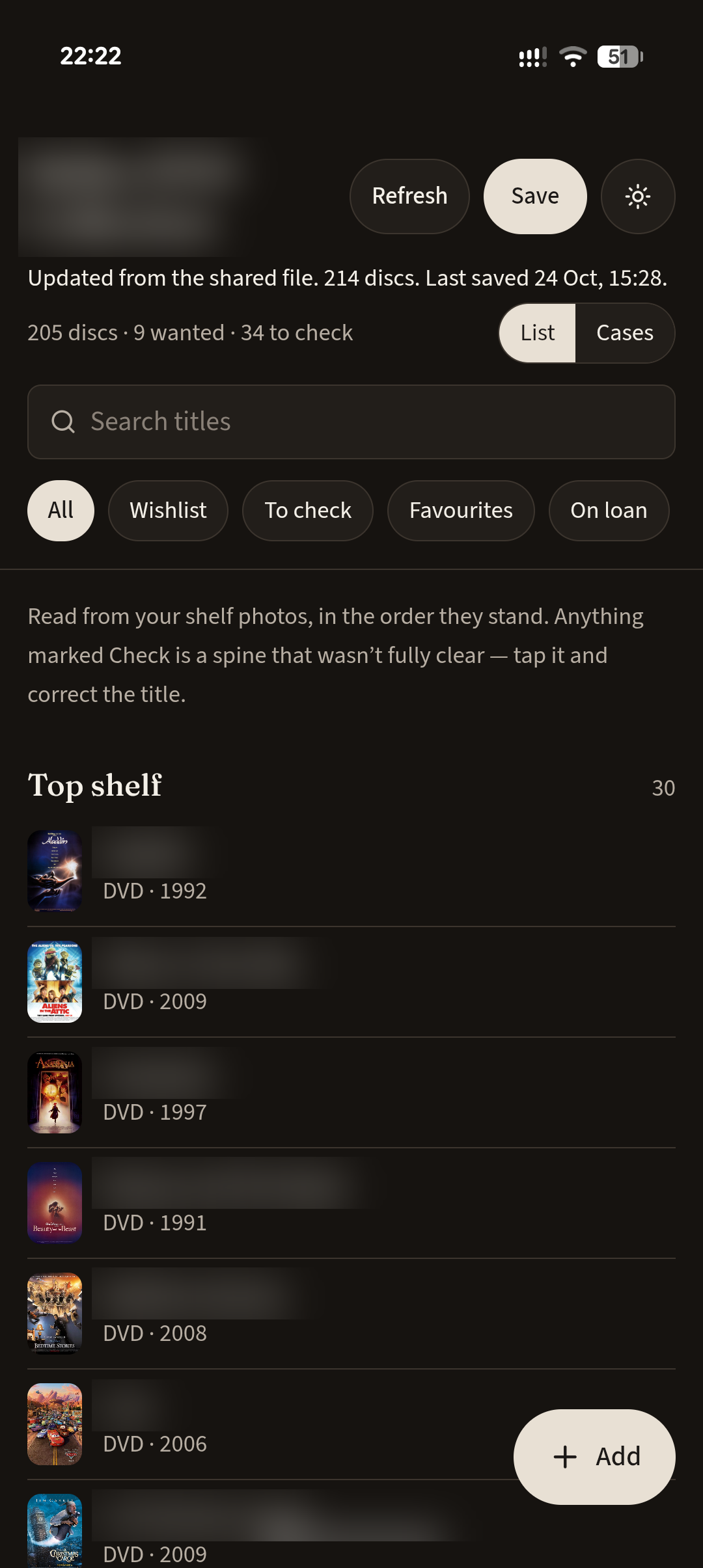
It read the shelves for us. The hardest part of any collection list is the first day, when you have to type in everything you already own. We skipped that. The app reads titles from photos of the shelves and lists them in the order they stand. That got us past 200 discs without typing them in one by one.
It knows when it isn't sure. Spines in a shelf photo are small, and some are worn or at an angle. When the app can't quite read one, it adds the title marked "to check", so you can tap it and fix it instead of trusting a guess. That small piece of honesty is my favourite part.
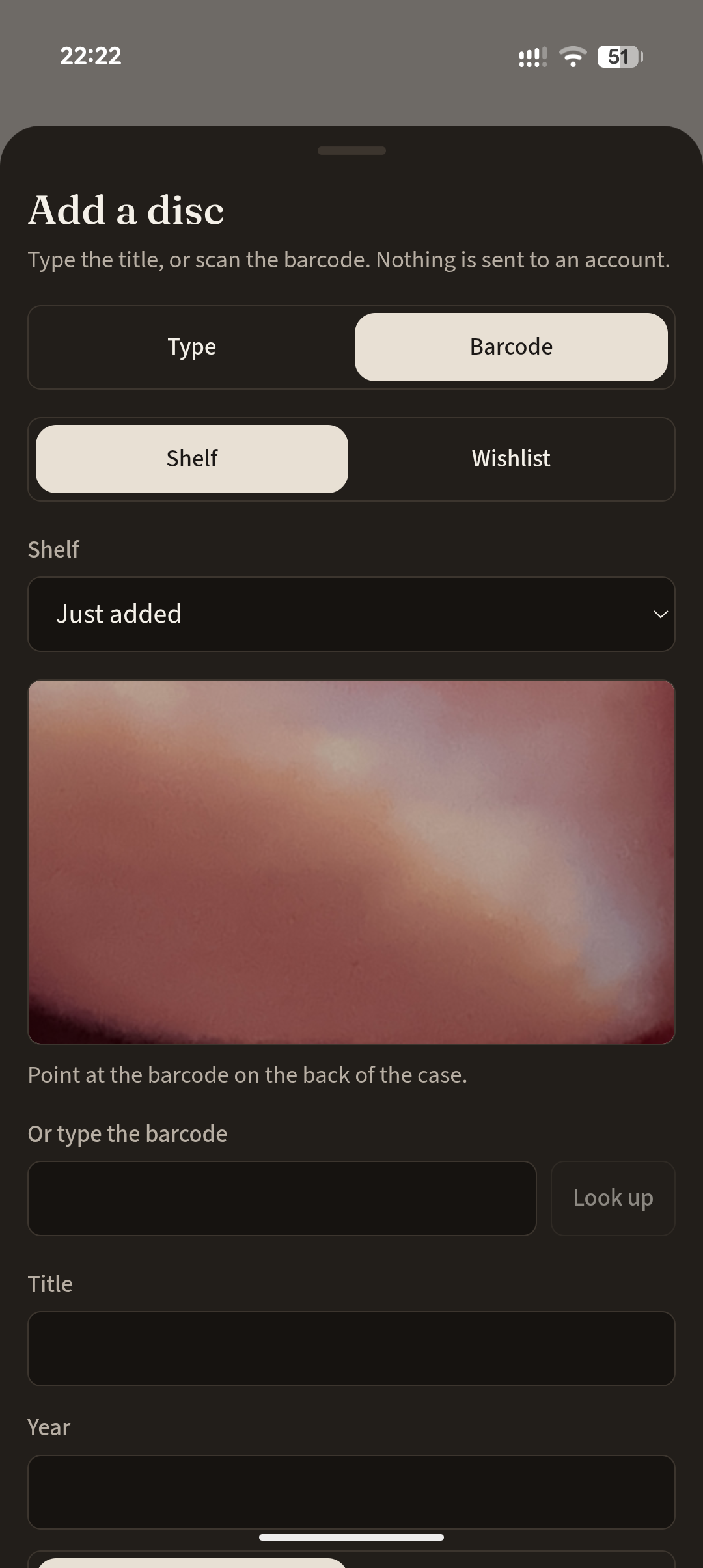
New discs go in by barcode. Point the camera at the back of the case and it's added, box art and all. A list you have to type into is a chore. A list you add to by pointing your phone at a box is quicker than not bothering, so it actually stays up to date.
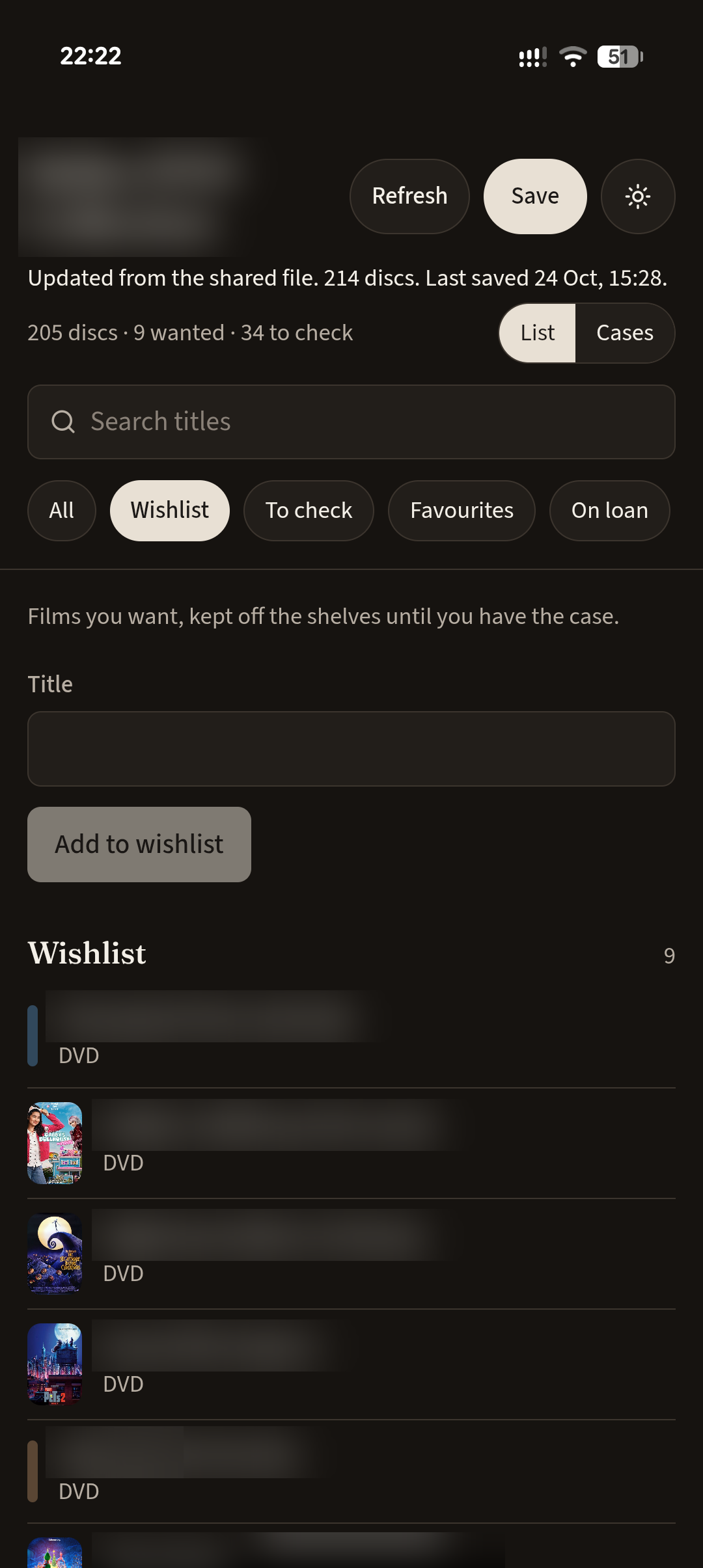
There's a wishlist. The films she wants are kept separately from the ones she owns, so a trip to the shops starts with a plan.
It also has a Favourites tab, and an "On loan" tab for keeping track of which discs have gone to a friend's house. Anyone who has ever lent out a DVD will see why that's useful.
How long it took
It wasn't one prompt and done. It took about two hours and four revisions to get everything working properly. That's not nothing, but it's an evening, not a project.
The app is installed on both our phones straight from an APK file, with no app store involved. There's no sign-up and no account. The collection lives in a shared file on Google Drive, so either of us can add a disc and the other sees it. That turned out to matter more than I expected: when she's out with a DVD in her hand, the list on her phone is the same one I updated at home.
Why this one stuck with me
I've used AI for plenty of things. Drafting, summarising, the odd bit of code. This was the first time it took a request that was "help me make a list" and answered the question I should have asked, which was "what would make this list easy enough that she'll actually keep it?"
The gap between those two questions is usually where small home projects die. Nobody builds a custom app to track a DVD collection, because it isn't worth the effort. It only becomes worth it when the effort shrinks to a couple of hours.
That's the bit I keep coming back to. Software for an audience of one (or two) is now a reasonable thing to want. It isn't a product or a startup idea, just a tool that fits one person's hobby exactly and does nothing else.
The result
She has an app built for what she actually does. She scans new DVDs, checks the wishlist before she buys, and hasn't brought home a duplicate since. A note on her phone would have been fine, but this is better, and it cost a couple of hours and a bit of back and forth.